

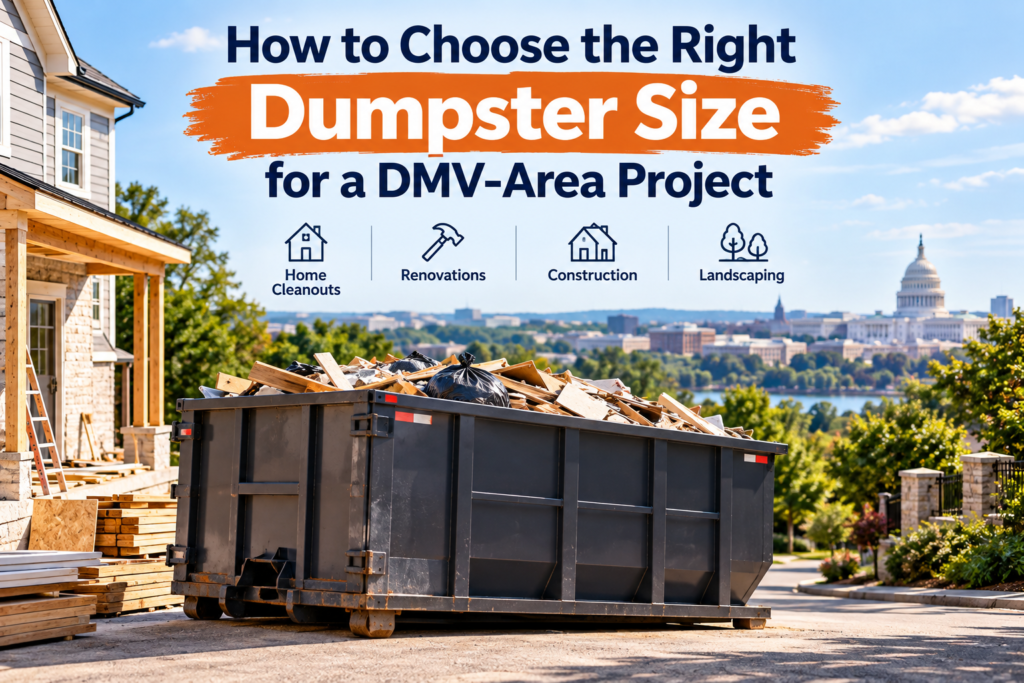
Choosing a roll-off dumpster by appearance alone can be misleading. A container that seems oversized in a photo may fill quickly once cabinets, flooring, branches, or bulky household items are placed inside. Start by defining the project rather than guessing the volume. Write down which rooms or outdoor areas are involved, what materials will be removed, and whether the work is a light cleanout, a renovation, or a larger construction job. That simple inventory gives a rental provider better information than saying you have “a lot of debris.”
Husky Waste Management offers multiple dumpster sizes for residential, commercial, and contractor projects. A 20-yard container can suit garage cleanouts, small kitchen renovations, and garden cleanups. A 30-yard dumpster provides more room for whole-home remodeling, deck removal, or substantial landscaping work. A 40-yard option is intended for projects that need greater capacity. Material type still matters because dense debris can reach weight limits before a container looks full.
Measure the proposed placement area before reserving a dumpster. Account for the container footprint, delivery truck access, overhead branches or wires, gates, parked vehicles, and room for the door if the container has one. Then discuss the project timeline. If debris will be generated in stages, a smaller container with planned pickup may work differently from a larger container kept for the full job. Compare included rental time and tonnage rather than focusing only on the advertised container size. When uncertain, describe the largest pieces and ask how they affect the recommended overall capacity.
Customers across the DMV area should also identify items that may require separate handling. Hazardous materials, chemicals, tires, batteries, and certain electronics are listed as prohibited, so clarify questionable materials before loading. Describe heavy items such as concrete, bricks, tile, or soil specifically because a dedicated container may be more appropriate. The right size leaves enough capacity to load safely without paying for space your project cannot use. A detailed debris estimate is the best starting point for that decision.