

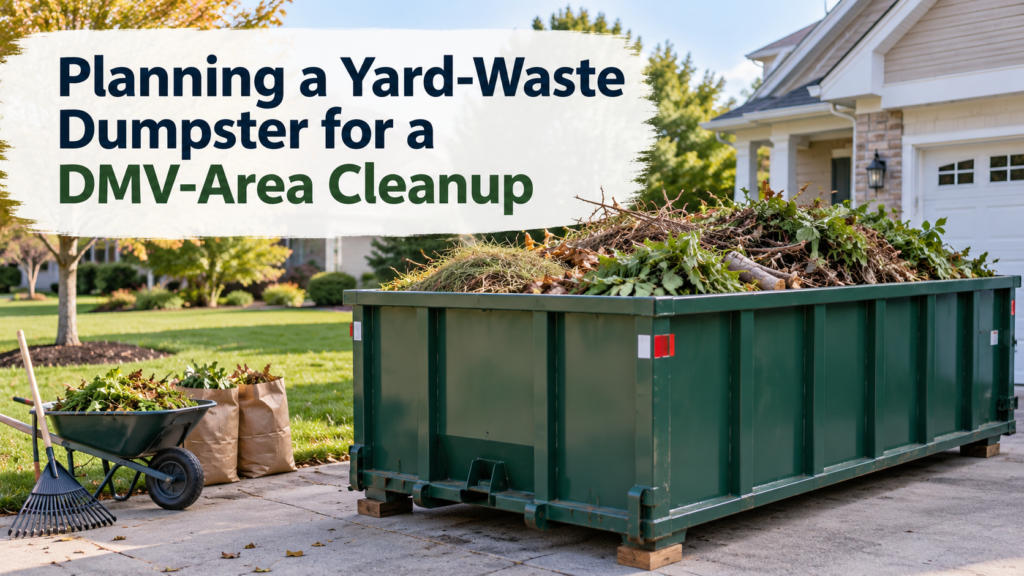
Branches, brush, leaves, and garden debris can overwhelm curbside collection during a large outdoor project. A yard-waste dumpster creates one central loading point, but it works best when the cleanup is planned around the materials being removed. Walk through the property before booking and estimate the number of shrubs, limbs, garden beds, or landscape sections involved. Separate ordinary yard debris from fencing, outdoor furniture, bags of household trash, treated lumber, and other materials that may not belong in the same load.
Husky Waste Management lists a dedicated yard dumpster for landscaping, tree removal, seasonal cleanup, and garden projects. Explain whether the load will contain leaves, grass, branches, brush, soil, mulch, or root balls because material weight and disposal requirements can differ. Wet vegetation and soil become heavy quickly. Cutting long branches into manageable sections and keeping dirt to the amount approved for the container can make loading safer and help prevent unexpected weight issues.
Placement affects the pace of an outdoor cleanup. Choose a firm, level spot that is close enough to the work area without blocking vehicles, gates, sidewalks, or equipment. If a tree company or landscaping crew will participate, coordinate the delivery window and loading plan with them. Do not allow debris to extend above the top edge of the dumpster. Loose branches projecting outward can create hazards during transport and may delay pickup until the load is corrected. Keep tools and workers away from the truck’s path during both delivery and pickup to avoid last-minute access problems.
For projects across the DMV area, timing the rental around weather and labor can reduce wasted days. Complete cutting or pruning shortly before delivery when possible, then load the heaviest or most awkward pieces first without climbing into the container. The company’s homeowner service includes yard-waste removal and scheduled pickup. Before booking, confirm the accepted materials, rental period, included weight, and pickup process. A clean, separated load is easier to manage than a mixed pile assembled without a disposal plan.